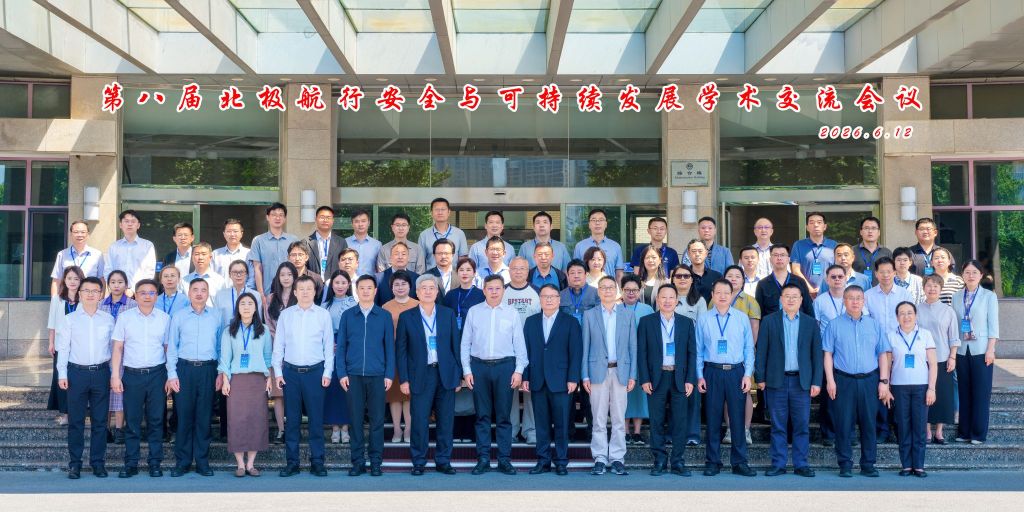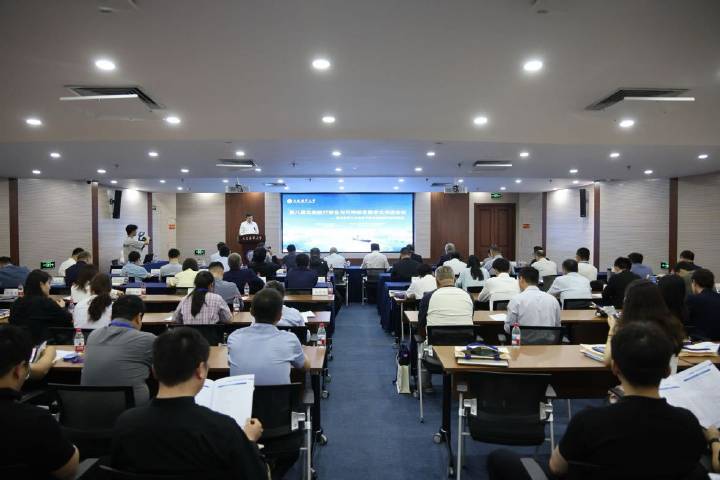
On June 12, the 8th Academic Conference on Arctic Navigation Safety and Sustainable Development was held at Dalian Maritime University. The conference was jointly guided by the Dalian Municipal People's Government, China COSCO Shipping Corporation Limited and Dalian Maritime University. Li Shixin, Executive Vice Chairman of China Institute of Navigation, attended the conference and delivered an address.
With the theme "Development and Utilization of Arctic Shipping Routes Amid Profound Global Changes Unseen in a Century", the conference responds to the national strategic arrangements set out in the recommendations for the 15th Five‑Year Plan to build China into a maritime power and a transportation power and advance polar‑related undertakings. The agenda includes keynote presentations, research outcome releases, as well as parallel sessions on strategic security and shipping technology. More than 100 experts and scholars from over 40 institutions including government authorities, domestic universities, research institutes, port and shipping enterprises took part in the event, covering disciplines such as Arctic policy research, polar shipping technology, maritime law and international relations.
In his address, Li Shixin pointed out that the recommendations for the 15th Five‑Year Plan take high‑quality development of the marine economy as a key priority. In March 2026, General Secretary Xi Jinping published the important article Promoting High‑Quality Development of the Marine Economy in Qiushi Journal, which provides fundamental guidance for China's Arctic undertakings. As an active participant, builder and contributor in Arctic affairs, China adheres to the basic principles of "respect, cooperation, mutual benefit and sustainability", and stands ready to work with all parties to tackle challenges brought by Arctic changes.
China Institute of Navigation (CIN) will keep serving as a bridge linking universities with port and shipping enterprises. It will break technical bottlenecks for ice‑region navigation through scientific and technological innovation, deepen multilateral cooperation via openness and collaboration, keep the ecological red line for the Arctic, and strike a balance between waterway development and environmental protection. It will contribute maritime expertise to foster a maritime community with a shared future and accelerate the building of a transportation power.
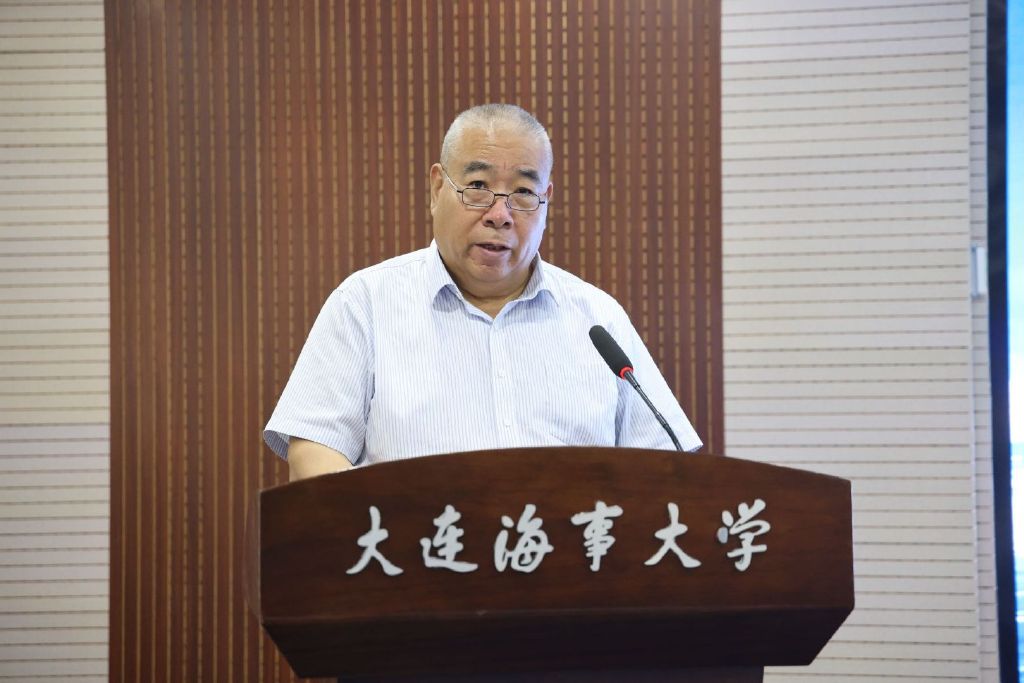
During the keynote session, industry experts delivered speeches covering navigation data and safety challenges since the commercial operation of the Arctic Northeast Passage, prospects of spatiotemporal intelligence and digital twins for Arctic governance, as well as research progress and key R&D priorities for core areas including polar‑grade ship materials and ice‑capable propulsion systems.
Two academic achievements were released at the conference: The Awakening of the Hub: The Evolving Strategic Value of the Arctic and China's Interests and the Polar‑Region Ship Navigation Simulator. Two parallel forums on Strategic Security and Shipping Technology were held in the afternoon. Fifteen experts and scholars exchanged views on policy‑related topics such as China‑Russia Arctic shipping cooperation, development trends of Arctic shipping routes and environmental supervision for polar shipping, alongside technical issues including ice trials of polar vessels, intelligent sea‑ice identification, practical ice‑navigation operations, remote‑sensing applications and the economic efficiency of shipping routes.
Launched in 2016, the Academic Conference on Arctic Navigation Safety and Sustainable Development has run for eight sessions so far, making it one of China's longest‑running and most‑inclusive academic exchange platforms for Arctic shipping.
CIN will continue to boost the coordinated development of key technology research for polar navigation and policy studies, to support China's drive to build a maritime power and a transportation power.