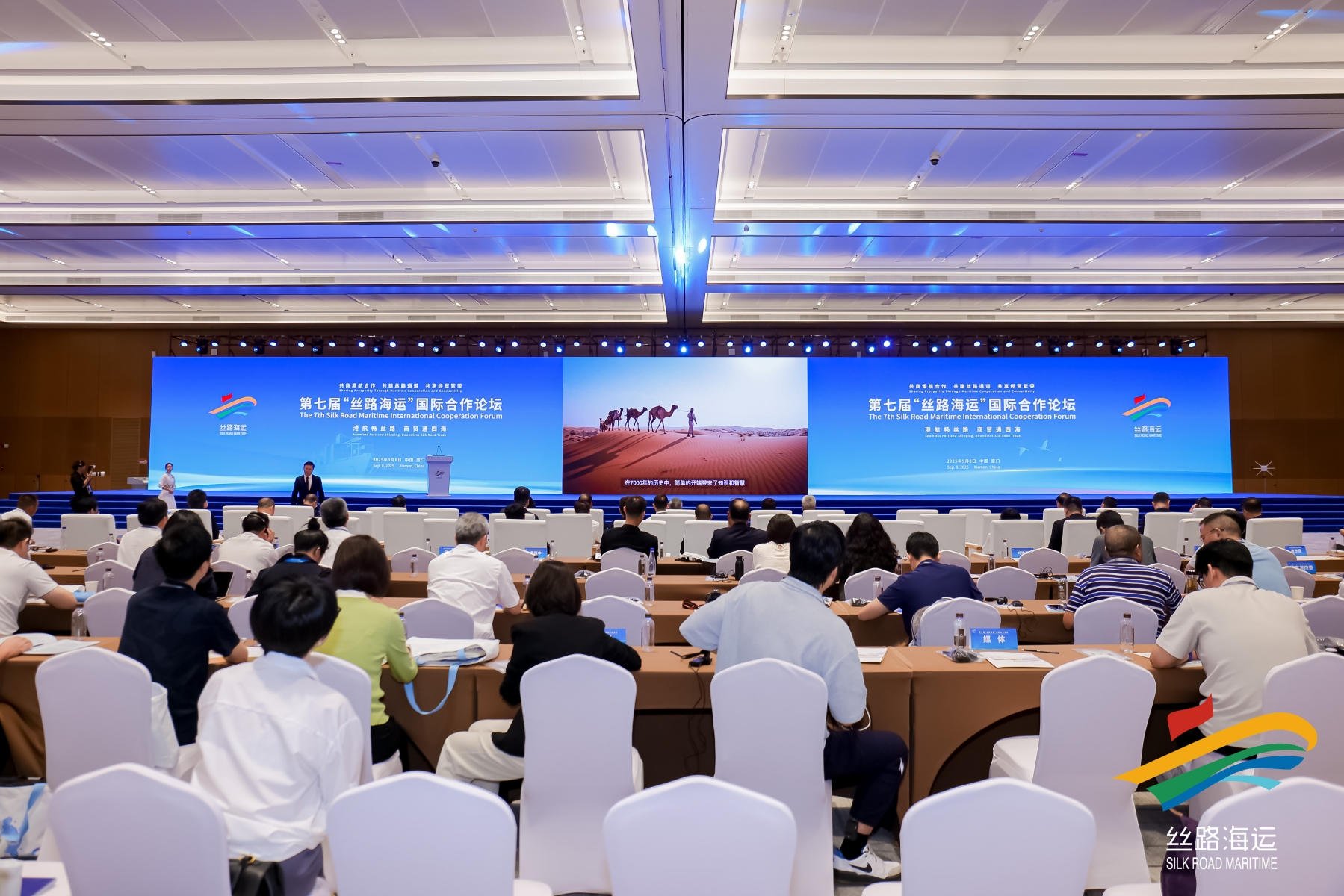
On September 8, the 7th Silk Road Maritime International Cooperation Forum opened in Xiamen, Fujian Province. Zhao Long, Deputy Secretary of Fujian Provincial Party Committee and Governor of the Province, attended the main forum. Zhou Haibing, Vice President of the National Development and Reform Commission; Li Yang, Vice Minister of Transport; and Wang Yongli, Standing Committee Member of the Fujian Provincial Party Committee and Executive Vice Governor, delivered keynote speeches. He Jianzhong, President of China Institute of Navigation, and Gu Jinshan, President of the China Ports and Harbours Association, also delivered speeches at the forum. Wu Bin, Deputy Secretary of Xiamen Municipal Party Committee and Mayor of Xiamen, presided over the event. Ahmed Shiyam, Minister of Fisheries and Marine Resources of the Maldives; Dragan Glamočić, Minister of Agriculture, Forestry and Water Management of Serbia; and Samir Abdelhafeez, Minister of Economy and Planning of Tunisia, delivered thematic speeches.
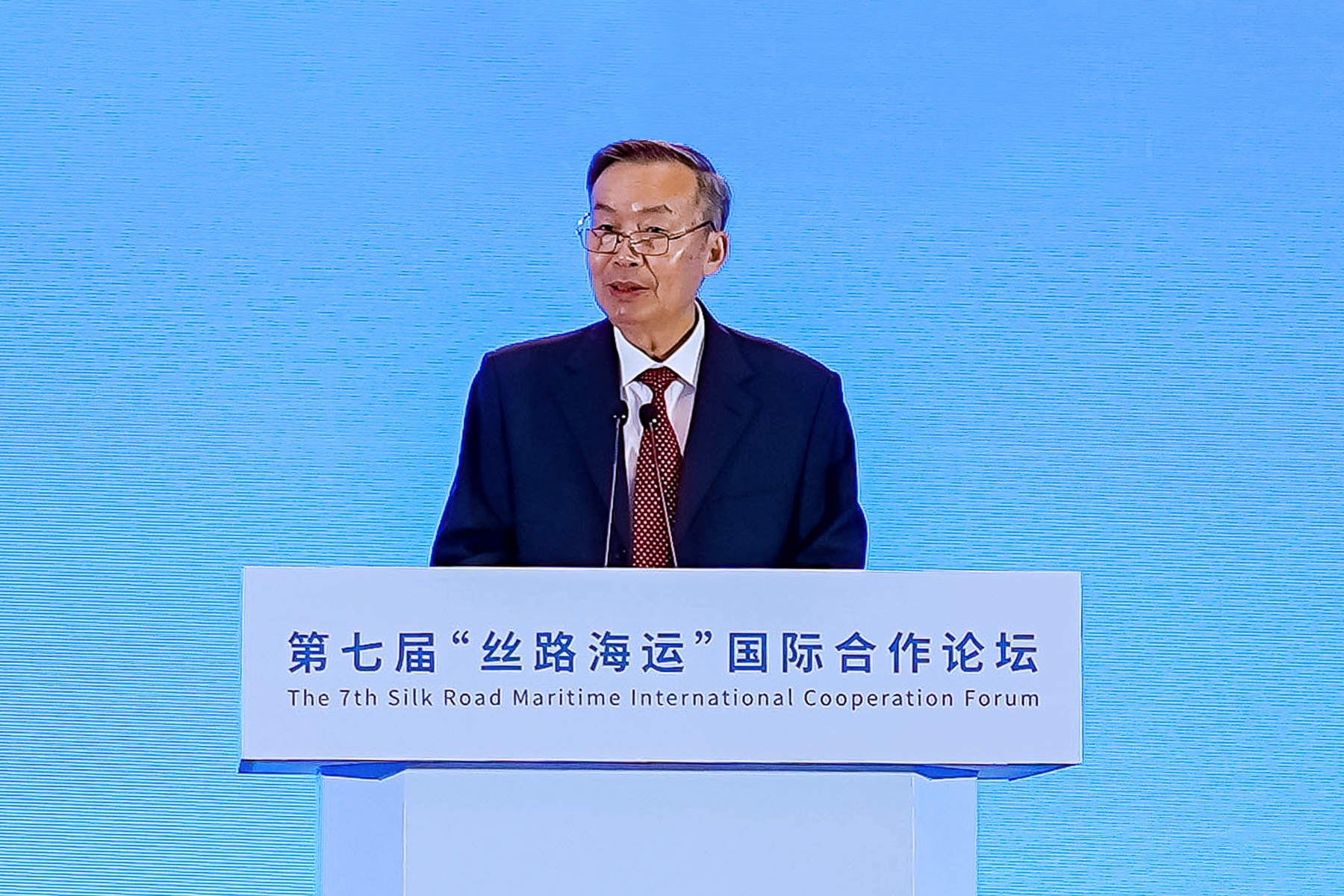
He Jianzhong, President of China Institute of Navigation
In his speech, He Jianzhong stated that it was essential to align with the new trends of green and low-carbon development in the port and shipping industry. This requires not only focusing on self-driven technological innovation to address challenges but also engaging in industry-wide integrated innovation and cooperation. Firstly, it is crucial to enhance scientific and technological research efforts to address the issues that hinders the use of new energy sources in ships. Through technological innovation, we should effectively resolve the industrial application challenges related to the technical maturity, availability, economic viability, safety, and regulatory standards of new energy sources, thereby achieving standardized and large-scale construction of new energy ships and accelerating the green transformation of the shipping industry. Secondly, it is necessary to promote the greening of port infrastructure and expedite the development of green infrastructure. This involves enhancing the utilization of renewable energy and clean energy equipment and facilities, vigorously promoting the use of new energy sources, fostering clean, low-carbon, and efficient development of port energy and power systems, and establishing a clean and low-carbon port energy consumption system that achieves electrification of terminal energy use and greening of power sources.
He also highlighted the importance of seizing new opportunities presented by digital technologies to facilitate the integrated development of the upstream and downstream sectors in the port and shipping industry. The industry must deeply integrate with new-generation information technologies, leverage big data for precise ship and cargo management, utilize blockchain technology to ensure data security and transaction credibility, and rely on artificial intelligence to enhance port operational efficiency and the development of intelligent ships. Additionally, it is essential to establish and improve mechanisms for the confirmation of rights, circulation, and trading of port and shipping data resources, refine cross-border data flow regulations, and strengthen the construction of cybersecurity protection systems. The port and shipping industry should seize the historic opportunity presented by the new technological revolution, vigorously promote the deep integration of digital technologies with the industry, innovate service platforms, and transform development models. By leveraging cloud computing, big data, blockchain, and artificial intelligence, the vision of “efficient passenger travel and smooth cargo flow” can be translated into new service products, thereby forming new business formats, and enhancing the value of shipping, and driving high-quality development in the port and shipping industry through new quality productive forces.
Furthermore, He called for joint efforts to create a new landscape of win-win cooperation under the “Silk Road Maritime” initiative. Faced with severe challenges to the development of the port and shipping industry posed by new changes and uncertainties, partners of the Initiative should uphold a shared development philosophy, ensuring that service prices and values, standards and norms, and efficiency and benefits are more collectively competitive and sustainable, thereby enhancing the resilience and robustness of global supply chains. It is essential to adhere to a global governance system based on extensive consultation, joint contribution, and shared benefits, oppose unilateralism, and practice multilateralism. We should actively expand global partnerships, strive for mutual recognition and interoperability of rules, unify shipping service standards, optimize port clearance procedures, and reduce cross-border trade costs. By doing so, we can transform the port and shipping network into a solid bridge connecting the economies of countries worldwide and promoting cultural exchanges and mutual learning among civilizations. Through practical actions, we can jointly build a community with a shared future in terms of political mutual trust, economic integration, and cultural inclusivity, as well as a community of shared interests and responsibilities. By innovating development approaches, we can continuously deliver new achievements in win-win cooperation. With the further implementation of the “Six Corridors, Six Routes, and Multiple Countries and Multiple Ports” framework, the port and shipping industry will establish more key ports and nodal hubs for connectivity, yielding further achievements in mutual benefit and collaborative success.
He Jianzhong stated that the China Institute of Navigation (CIN) will, as always, support and take an active part in organizing the Silk Road Maritime International Cooperation Forum, leveraging the Institute’s organizational strengths, platform role and capacity for building consensus to give still greater impetus to the Forum’s cohesion, academic leadership and global influence.
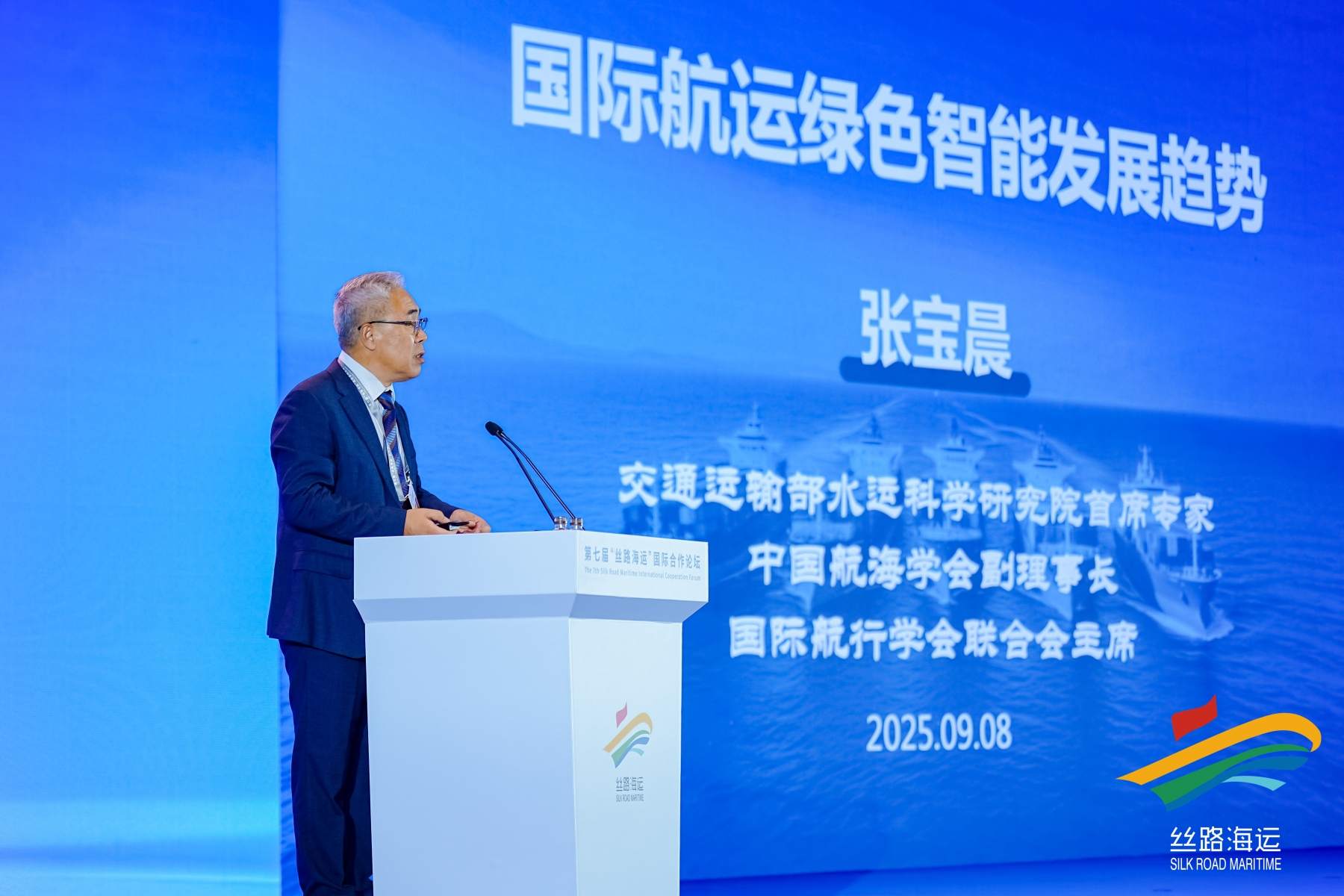
Zhang Baochen, Vice-President of CIN and President of the International Association of Institutes of Navigation (IAIN)
According to the organizers, this year’s Forum, under the theme “Seamless Port and Shipping, Boundless Silk Road Trade”, featured a plenary session, parallel fora, the 2025 Silk Road Maritime Round-table, and a Port-&-Shipping/Trade match-making event. Its international level hit a new high: more than 1 500 delegates from over 30 countries and regions—covering ports, shipping, logistics, trade, finance and technology—attended. Keynote speeches were delivered by: Ren Weimin, Director of the Transport Division, United Nations Economic and Social Commission for Asia and the Pacific, on “Sharing Prosperity through Enhanced Maritime Connectivity in Asia-Pacific”; Zhang Baochen, President of IAIN, on “Green and Smart Development Trends and Prospects for International Shipping”; and Zhang Ruosi, Counsellor, Trade in Services & Investment Division, World Trade Organization, on “Building Certainty for Trade and Shipping in an Age of Uncertainty”. The Forum released the “Top Ten Achievements of Silk Road Maritime”, the Blue Book of Silk Road Maritime 2025, the Phase-II plan for the Silk Road Maritime International Shipping Integrated Service Platform, the China New & Clean Energy Vessels Development Report 2024, the Fujian Port-Economy Development Report 2024, and the 15 newly designated routes of the 15th batch of “Silk Road Maritime” named services. For the first time it launched the Silk Road Maritime Port-&-Shipping Green Evaluation System. In addition, 14 new members of the Silk Road Maritime Alliance were awarded plaques, and ten co-operation projects involving 27 domestic and overseas institutions and enterprises were signed on site.