
The Fuzhou Aids to Navigation Office has rolled out a package of measures to safeguard maritime navigation in waters under its jurisdiction across northern Fujian, as the overlapping Mid-Autumn Festival and National Day holidays drove a sustained rise in shipping and fishing operations and heightened risks to navigation at sea. Leveraging coordinated land-and-sea operations and technology, its navigation support personnel have shifted into an "escort mode," carrying out aids-to-navigation inspections, emergency repairs and hazard screening to keep passing vessels on safe routes.
At sea, navigation support vessels seized favorable weather windows to maintain continuous operations. Under the original plan, the vessel Haixun 1620 was scheduled to sail to Luoyuan Bay on September 23 for the annual lifting and replacement of navigation marks. On the evening of September 22, however, the captain received an emergency repair order at short notice. After immediate assessment, the crew flexibly adjusted the operating plan and, in the intervals between the scheduled lifting and replacement work, rushed to the scene to address a light buoy malfunction, completing both the emergency repair and the annual replacement in a single continuous operation and effectively maintaining the aids' navigational performance.
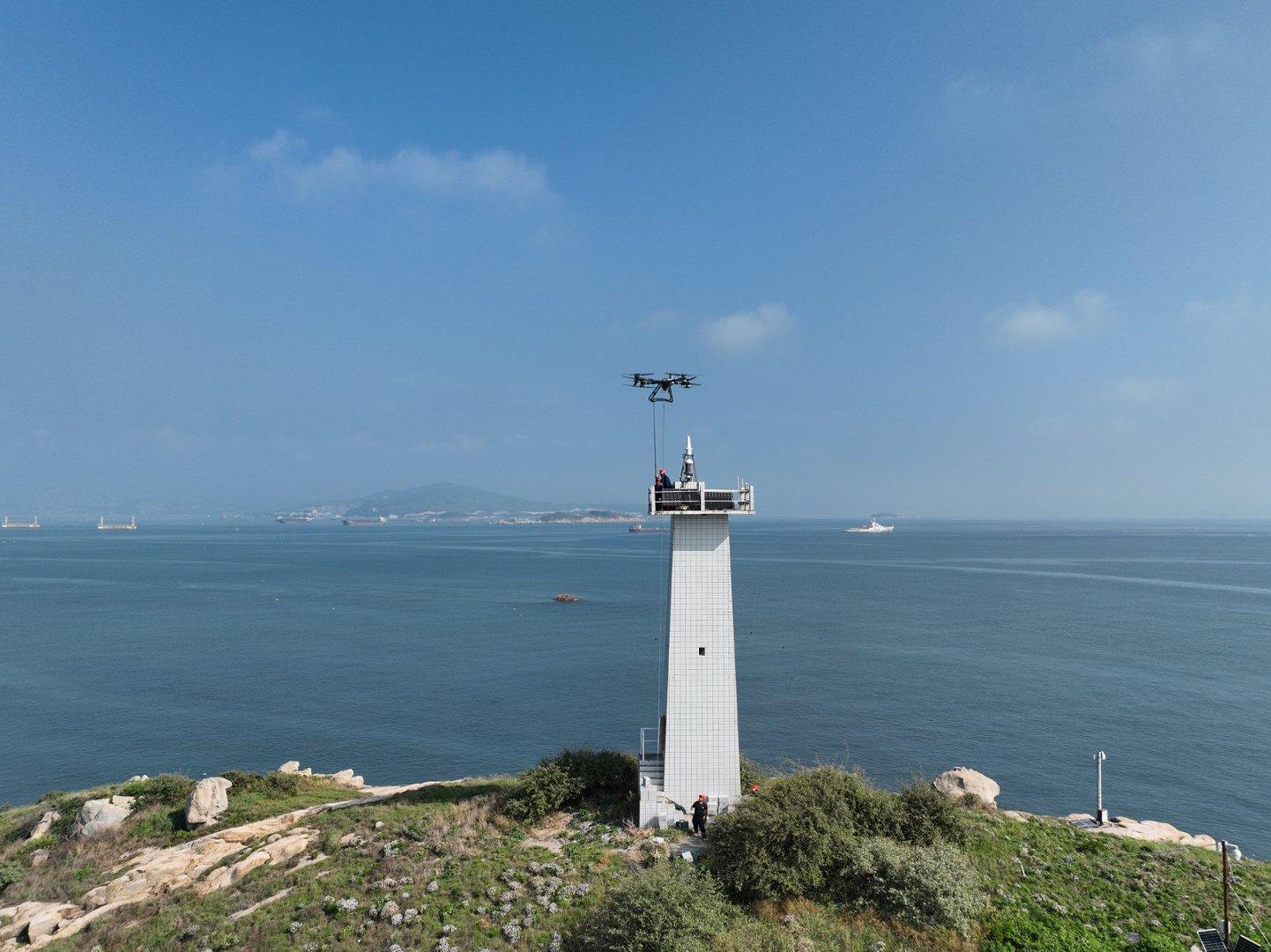
On a remote offshore island, drones took to the air to handle what had long been a highly difficult task: maintaining the lighthouse battery system. On September 26, the Fuzhou Aids to Navigation Office used a lifting drone to complete the replacement of the battery bank at Simuyu Lighthouse. Staff set out before dawn and overcame challenges including the island's limited transport access and changeable sea conditions. Using shore-to-ship transfers, drone lifting and coordinated manual handling, they completed the battery replacement and the recovery of the old batteries in eight hours. Drone technology has overcome geographical constraints and addressed gaps in difficult offshore navigation service operations, becoming a powerful tool for modernizing aids to navigation. Drones are now widely used in aids-to-navigation patrols, equipment lifting and facility data collection, among other applications, continuously unleashing the potential of technology-driven navigation services.
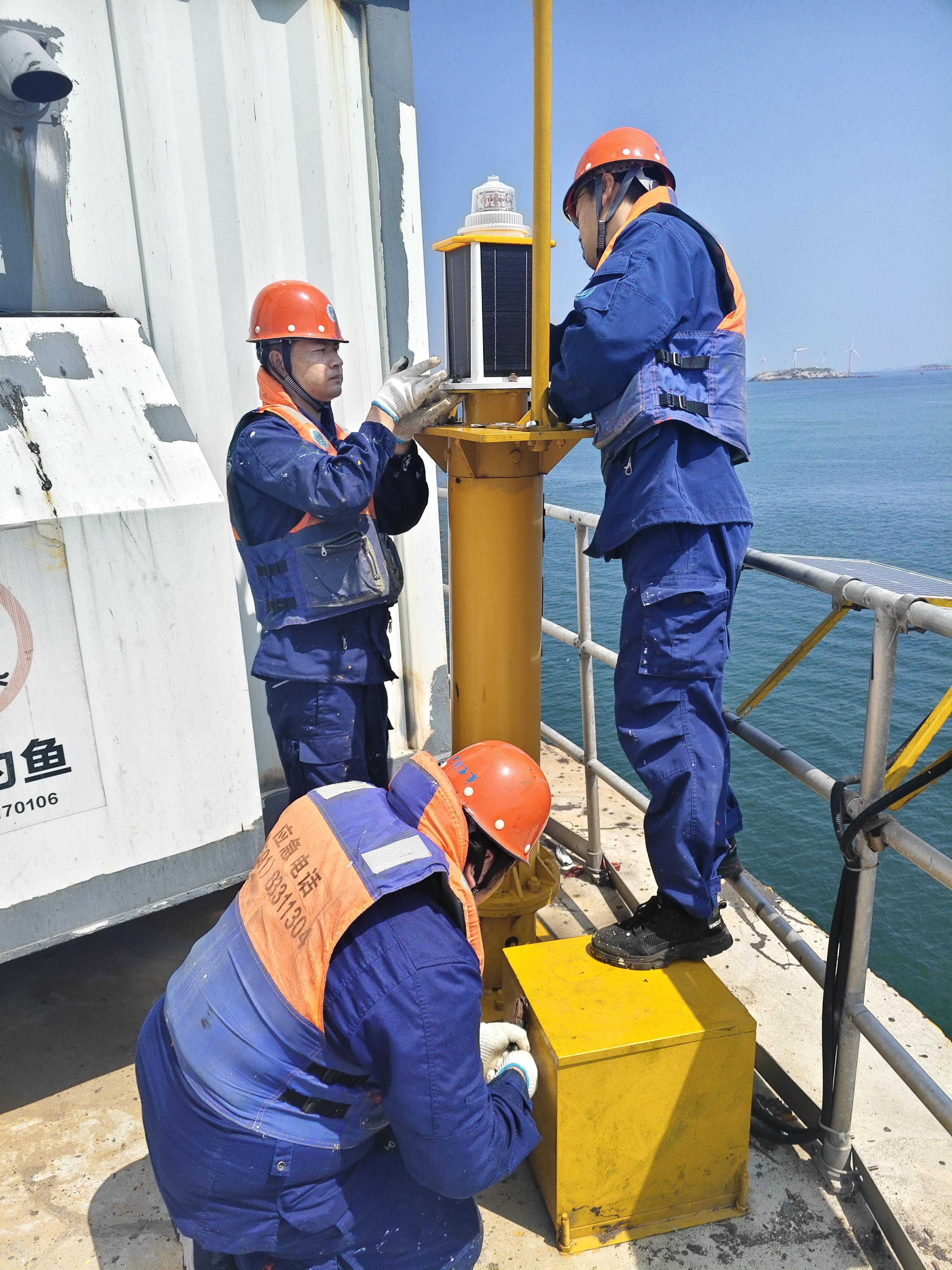
Multiple inspection teams were deployed simultaneously to waters across the jurisdiction. The Mawei Aids to Navigation Management Station joined the Majiang Maritime Safety Administration Office in a pre-holiday joint patrol, carefully checking the condition of fairway navigation marks and exchanging views on measures to prevent collisions between merchant and fishing vessels. The Fuqing Aids to Navigation Management Station worked with maritime, agricultural law enforcement, coastal defense and other departments on a joint maritime patrol at Jiangyin Port in Xinghua Bay, identifying hazards to navigation and providing safety education to crew members and fishermen. Aids-to-navigation maintenance technicians seized the early-morning operating window to conduct intensified inspections of 12 bridge navigation marks in the Beidongkou channel of the Pingtan Strait Road-rail Bridge, checking each mark's appearance, light operation and structural stability item by item and resolving any identified hazards on site in a closed-loop manner, sparing no effort to safeguard navigation safety in the bridge waters.
Reprinted from China Communications News Network