
In late September, subsequent typhoons “Tapah”, “Mitag” and “Ragasa” swept through South China, coinciding with a pre-holiday shipping peak ahead of the National Day and Mid-Autumn Festival. Amid strong demand from businesses across the Pearl River Delta, port operations intensified and yard utilization rates climbed. Throughout the extreme weather, Nansha Port in Guangzhou, capital of Guangdong Province, prioritized cargo safety by activating typhoon response plans in advance, systematically securing containers in storage areas, enhancing drainage, and maintaining real-time inspections. These efforts contributed to zero cargo damage in the typhoons, effectively safeguarding clients’ assets.

After typhoon warnings for “Ragasa” were lifted on September 25, the port resumed full gate operations. To address the strong pre-holiday logistics demand, the port mobilized all available equipment and assigned extra staff across shifts to boost handling capacity. Comprehensive measures were implemented to ease port congestion and improve traffic flow. On the one hand, increasing personnel for traffic coordination, documentation, container inspection and security; streamlining procedures to accelerate gate processing; on the other, collaborating with port police, local authorities, and traffic police to share real-time road information and deploy officers at key congestion points.
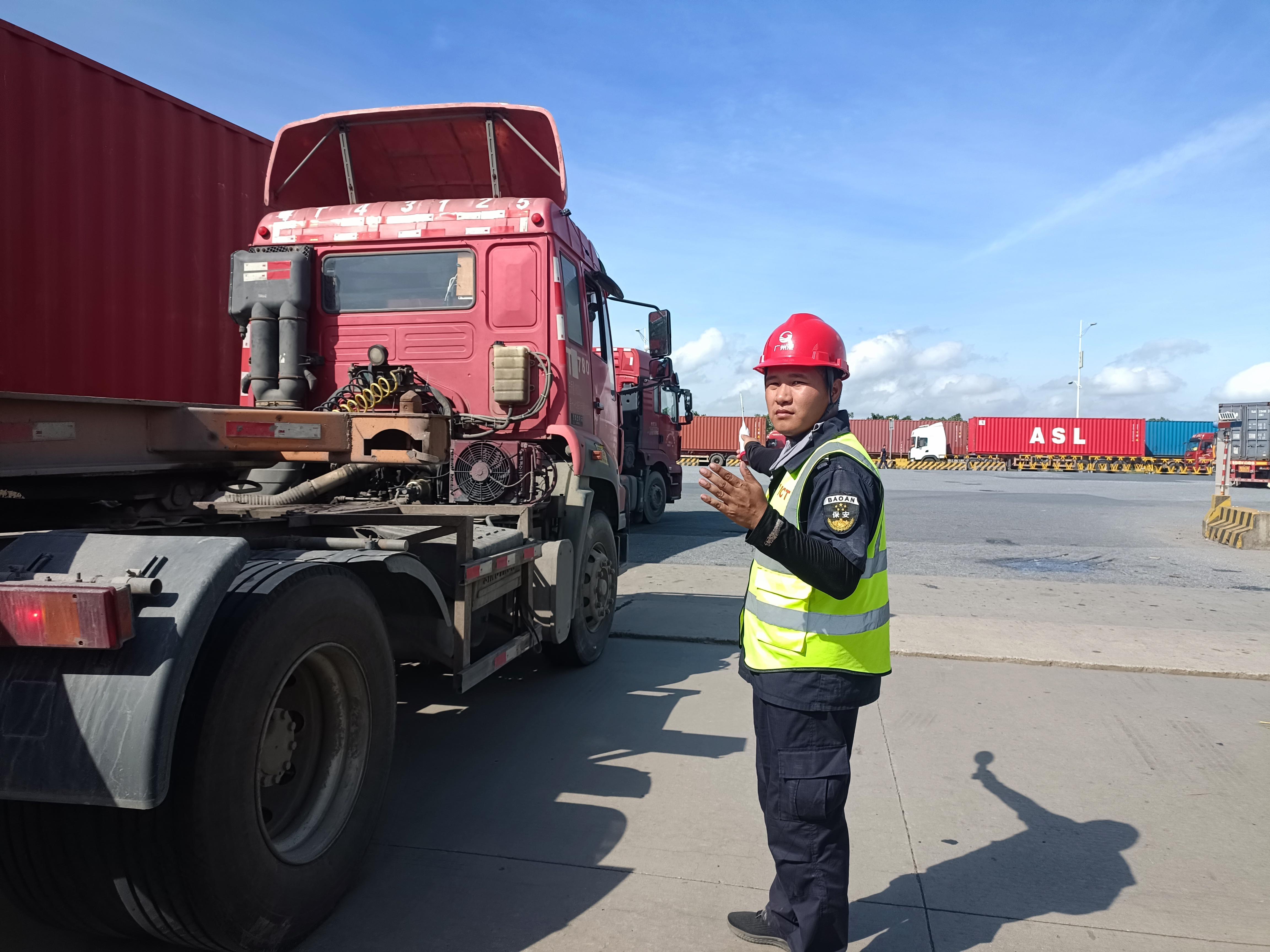
To better manage high yard utilization, Nansha Port optimized internal resource allocation, leveraging the turnover capacity of all gates and storage areas. Some containers were redirected as needed to ensure swift movement of urgent shipments. For ship arrivals and departures, the port optimized berthing schedules to expedite the flow of laden containers. Pilots prioritized container liner services by reducing breaks and working extra hours. Since the typhoons, the port has handled 110 domestic and international ships and processed over 57,000 truck entries, significantly alleviating yard pressure.
With strong support from district authorities, maritime, customs, border control, and port police, the port also provided care services for truck drivers — offering drinking water and meals to those waiting in line and responding to inquiries — helping maintain order and safety within the port area.

Currently, Nansha Port remains busy but stable. Guangzhou Port Group will continue to enhance yard turnover and gate efficiency, strengthen emergency response mechanisms, and refine service procedures to ensure the stability and fluidity of the Greater Bay Area’s logistics and supply chain.
Source from: China Transportation News Network