
On June 2, 2026, the 4th Tianjin International Shipping Industry Expo opened at the National Exhibition and Convention Center (Tianjin). Li Xinghu, Vice Minister of the Ministry of Transport, Chen Min'er, Secretary of the Tianjin Municipal Party Committee, and Zhang Gong, Mayor of Tianjin, attended the opening ceremony and jointly officiated at the launch.
Under the theme "Sailing the World, Powering the Future — AI Unlocks New Opportunities for Port and Shipping Development", the expo is co‑hosted by the China Institute of Navigation, together with the Tianjin Municipal Transportation Commission, Tianjin Municipal Bureau of Commerce, Tianjin Municipal Development and Reform Commission, the Foreign Affairs Office of the Tianjin Municipal People's Government, Tianjin Investment Promotion Bureau, the People's Government of Binhai New Area, China Shipowners' Association, China Association of the National Shipbuilding Industry and China International Freight Forwarders Association.
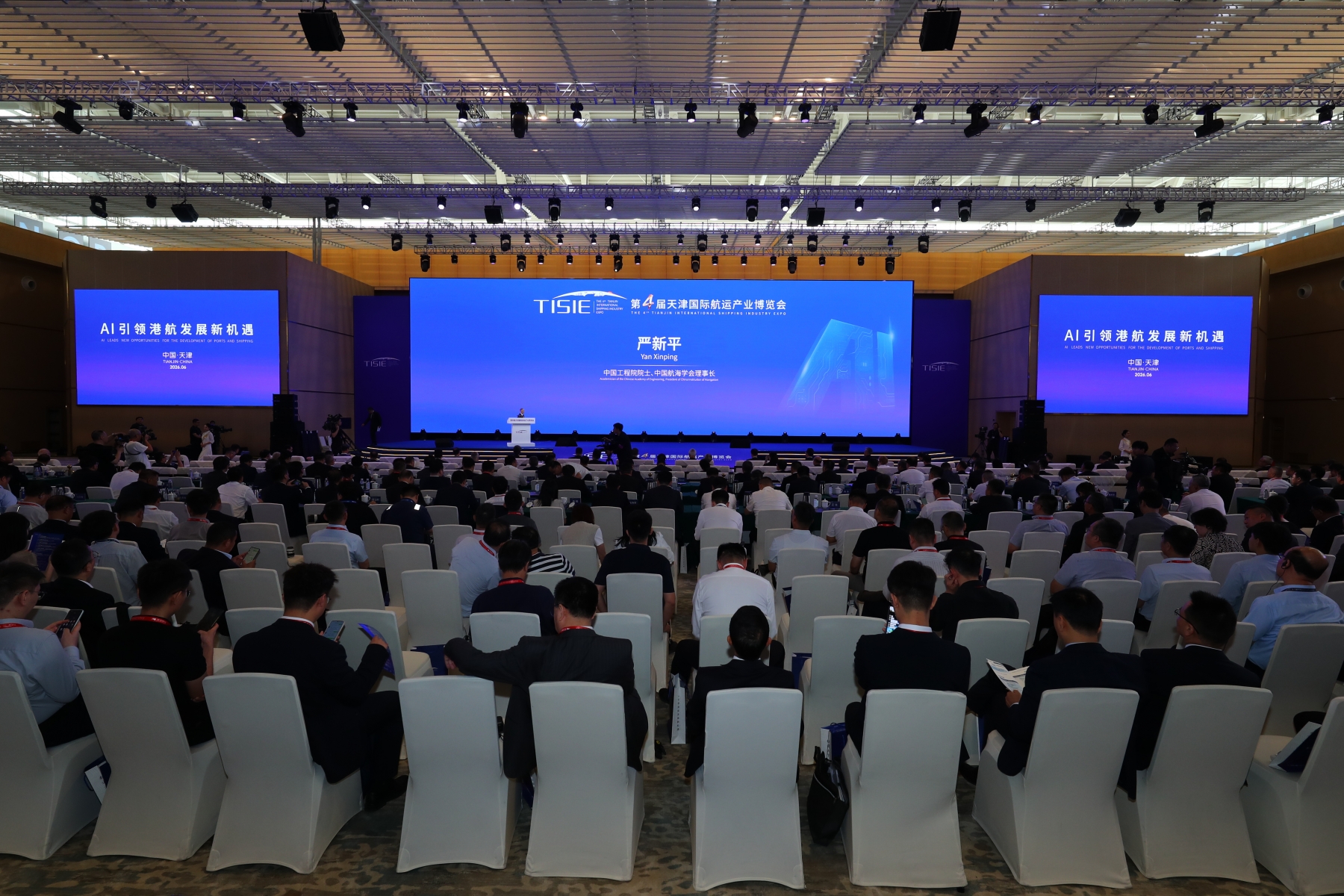
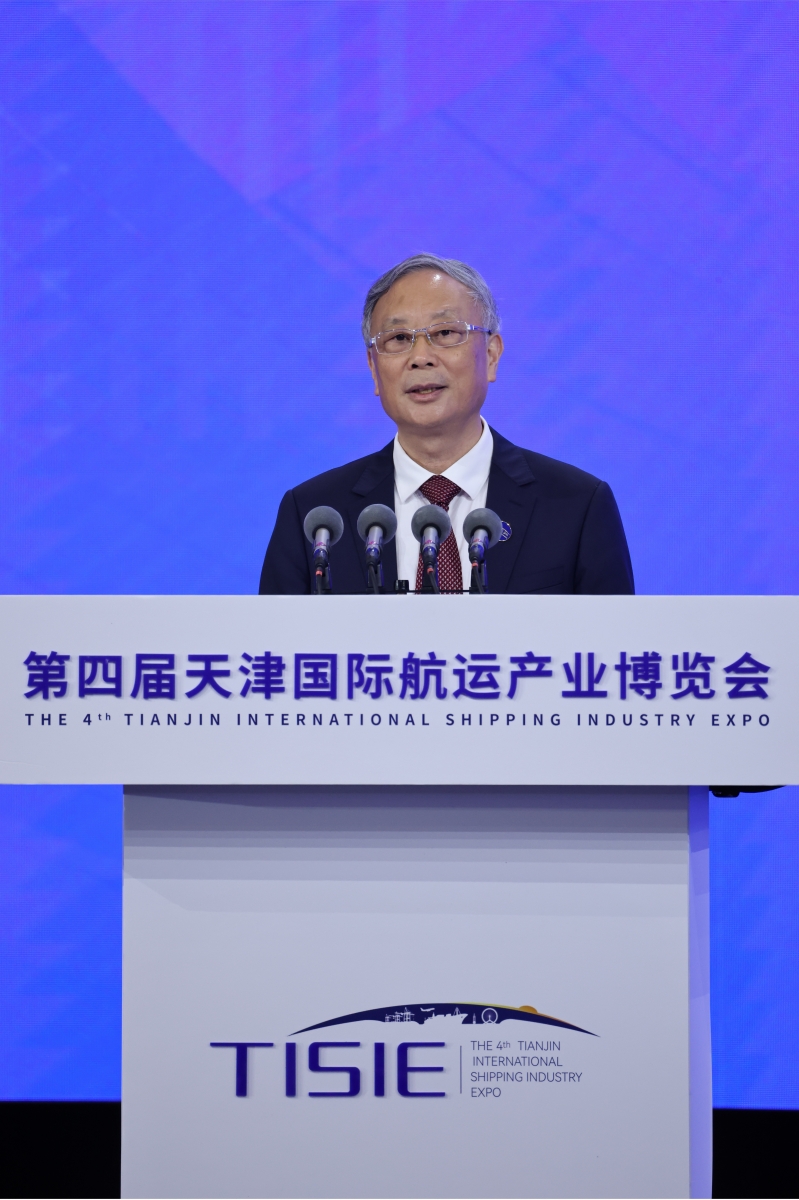
an Xinping, Chairman of China Institute of Navigation, attended the opening ceremony and delivered an address. He pointed out that Tianjin was established by its port and prospered from maritime businesses. Based on the overall strategy for the coordinated development of the Beijing‑Tianjin‑Hebei region, the Tianjin Municipal Party Committee and Municipal Government have advanced port‑industry‑city integration. Prioritizing the shipping sector as a core competitive industry of the city, they have built a broad platform for industrial innovation.
The global port and shipping sector now stands at a critical juncture of a new round of technological revolution and industrial transformation. The shipping industry is accelerating its shift toward intelligence, green transition, resilience and high efficiency, with a new‑generation shipping system taking shape that will reshape the industry's traditional business and operational models.
Co‑hosted alongside the 2026 World Transport Convention at the same venue, the expo and the convention complement and reinforce each other to generate synergistic empowerment, building a multi‑dimensional exchange ecosystem featuring integrated comprehensive transport and port‑shipping development.
Yan Xinping stressed that the industry should pursue in‑depth integration between AI and the shipping sector. It is vital to build an end‑to‑end and full‑coverage intelligent sensing system to achieve end‑to‑end data interoperability across the whole shipping chain, develop full‑scenario smart operation scenarios to improve port and vessel operational efficiency, set up an AI‑enabled intelligent risk control system to enhance shipping safety resilience, and accelerate the green and low‑carbon transition of the shipping industry to help deliver China's goals of peaking carbon dioxide emissions and achieving carbon neutrality.
He underscored that the development of the new‑generation shipping system requires forging a seamless innovation chain spanning basic research, key technology breakthroughs and research achievement commercialization, so as to boost industry‑university‑research‑application collaboration. The China Institute of Navigation will continue to act as a pacesetter for industrial progress, a driver of technological innovation and a facilitator of international exchanges and cooperation, contributing its strength to the high‑quality development of China's shipping industry.
During the event, research outcomes including the 2025 Report on China's Port Economic Development and New Pathways for Shipping, New AI Engines: Report on Artificial Intelligence Applications in the Shipping Industry were released. Covering an exhibition area of 50,000 square meters, the expo attracted more than 400 exhibitors from across the globe and remained open until June 5.